
The strikes on Iran’s buried nuclear facilities ordered by President Trump were an apparent success in stopping Iran’s nuclear program. The strike by B-2 bombers, which flew all the way from Missouri to Iran and back, set back Iran’s nuclear program by many years and perhaps ended it altogether. The entire world saw this attack and the nations now appreciate President Trump has the clear will to use America’s military power when he feels it is needed to solve a crisis or end a threat.
The aftermath of the strikes has produced what may be a remarkable cease-fire between Israel, Iran and the USA, although the cease-fire is rather shaky as it begins. Both Iran and Israel reportedly launched attacks on the other party after the cease-fire deadline occurred, but the cease-fire now appears to be holding as I write this post. There have even been media reports that Trump contacted Israeli Prime Minister Netanyahu to observe the cease-fire and a flight of Israeli warplanes had their attack orders cancelled after the Trump-Netanyahu conversation.
At first it looked like the war might widen when Iran announced it would close the Strait of Hormuz, endangering world oil supplies (first link and second link). Then came announcements the USA would not seek “regime change” in Iran and that Trump reportedly lobbied China to lean on Iran to not do such an act of war against the world’s nations using oil (which is all of them). Iran likely received word that if Iran did try to close the Strait of Hormuz, Iran’s small navy would be obliterated and Iran’s oil-producing capability would be bombed into uselessness. The third link and fourth link discuss the fact that China would have had its economy badly crippled if Iran provoked a wider war over the Strait of Hormuz. That surely motivated China to lobby Iran to not widen the war as China, one of Iran’s best customers, would quickly lose much of its oil supplies if Iran provoked a war in the Persian Gulf. This episode also revealed a clear fact that China may not have fully appreciated: that if China invades Taiwan the USA has the ability to cut off much of China’s imported oil supply within hours by hitting Iran’s petroleum’s industry.
The above complex factors resulted in the making of a cease-fire that developed rather quickly and unexpectedly (fifth link and sixth link). President Trump, when campaigning for President, made it clear he wanted no more needless “forever wars” like previous presidents waged in Iraq and Afghanistan. Trump was true to his campaign promises, not allowing the conflict to expand into a “mission creep” situation where the overthrow of Iran’s regime was also sought. Trump was satisfied Iran’s nuclear program had been destroyed so he leaned on all parties to end the hostilities.
There were two other developments that cast Trump in the light of a “Peace President.” Not long ago, India and Pakistan were trading artillery and warplane attacks and a wider war loomed between these two nuclear powers. President Trump was credited with talking the leaders of Pakistan and India away from escalating their conflict and ceasing their fire on each other. Citing these efforts, Pakistan announced it was nominating President Trump for the Nobel Peace Prize. However, Pakistan (which has friendly relations with Iran) changed its mind after Trump’s attack on Iran’s nuclear program with the B-2 bomber attack (seventh link). The other development, which deserved more attention but “got lost” in the media coverage of the Iran crisis, was that the USA just brokered a peace treaty between the Congo and Rwanda, two African nations which had been fighting for years (eighth link and ninth link). The USA was credited with creating this peace treaty and Trump reportedly used trade and minerals pacts as inducements to settle this long-standing conflict. It is possible that Trump and the USA negotiated a peace settlement which will direct some strategic minerals and rare earths to the USA as part of that deal.
President Trump is now heading to the NATO meetings in the Netherlands, riding a tide of success and restored respect for the USA. NATO nations (with the exception of Spain) seem to be willing to increase their defense spending goals to 5% of their domestic GDP. It should be noted, however, that some of the nations are committing to reach that goal many years into the future so how much they will increase their military spending immediately remains to be seen. I expect some military spending increases, especially in Germany, will happen rather quickly due to obvious military dangers posed by Russia. Russia is in an odd position: the longer it fights to conquer Ukraine via its unprovoked invasion, the stronger NATO will become militarily. Not only has Russia’s invasion moved NATO nations to increase military spending, but it also motivated Finland and Sweden to join NATO as full members.
There are currently a lot of pieces in motion on the global geopolitical chess board, but make no mistake about it: Trump is riding a wave of successes which has boosted his standing in the world and that of the the USA as well.
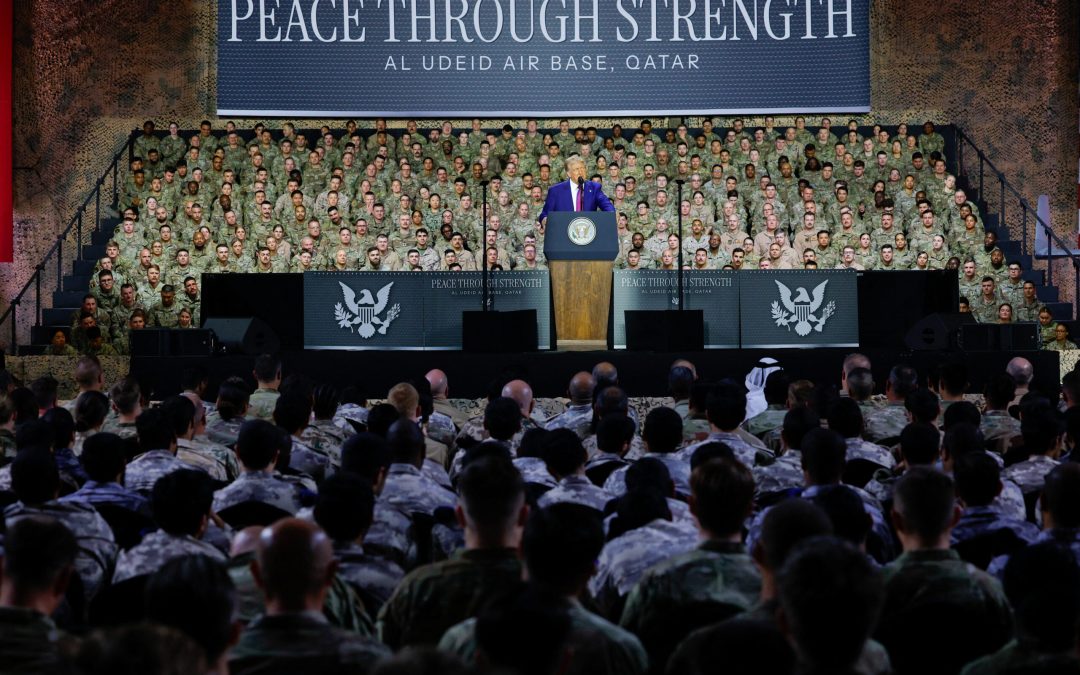
I’d like to make a final, biblically-based observation. Under President Biden, Biden and the USA lost immense amounts of respect. Biden’s cowardly withdrawal of troops from Afghanistan made the USA look very feeble. As Biden’s obvious senility became worse, Biden and the USA lost prestige and likely became the butt of jokes in important offices around the world. Trump’s decisive actions have turned things around dramatically. He has made it clear that while he will use America’s military might in a powerful manner when he decides it is necessary, he also has shown he genuinely wants peace as much as possible. I’m reminded of President Reagan’s credo of espousing “Peace through Strength.” It appears President Trump is a practitioner of that credo. Leviticus 26:19 cites God telling the ancient Israelites that if they habitually sinned against him, he would “break the pride of your power.” Notice this doesn’t say he’d end their national power; this statement asserts God would take away the “pride” of their power–the ability and willingness to effectively use their power when necessary. Nations in decline lose the pride of their power. America was, in many ways, rapidly “losing the pride of its power” under the disastrous presidency of Joe Biden, and America was in a steady and accelerating state of national decline. Ever since Donald Trump was elected president, he has acted with a sense of urgency to reverse the national decline under Biden and put the USA back on a road to national ascendancy. The USA is now respected around the world and I think the majority of Americans feel better about themselves with Trump at the helm of the nation.
- https://nypost.com/2025/06/22/
world-news/iran-orders- closure-of-strait-of-hormuz- putting-one-fifth-of-worlds- oil-supply-at-risk/ - https://www.youtube.com/watch?
v=vXRKzCVog8U - https://www.aa.com.tr/en/asia-
pacific/china-faces-oil- supply-risk-if-israel-iran- conflict-escalates/3606285 - https://www.bbc.com/news/
articles/c056pyv723vo - https://www.reuters.com/world/
middle-east/trump-announces- israel-iran-ceasefire-2025-06- 23/ - https://apnews.com/article/
israel-iran-war-nuclear-trump- bomber-news-06-23-2025- 9e78510c88ccc5e262341f41550609 c5 - https://www.foxnews.com/world/
pakistan-flip-flops-trump- nobel-peace-prize-nomination- after-less-than-24-hours - https://www.worldtribune.com/
trump-announces-congo-rwanda- treaty-deal-targets-china- control-of-africa-mineral- reserves/ - https://timesofindia.
indiatimes.com/world/us/great- day-for-africa-trump- administration-brokers-congo- rwanda-treaty-to-end-mineral- war-us-president-says-he- deserves-nobel-peace-prize/ articleshow/121984538.cms
