
As readers know, there is an on-again, off-again “ceasefire” in the Mideast war between Iran and the USA. It is not clear if the ceasefire will hold for an intended two weeks as some violations have occurred. In this post, I’ll turn the focus back to a growing, but largely unappreciated internal threat to the USA and its economy.
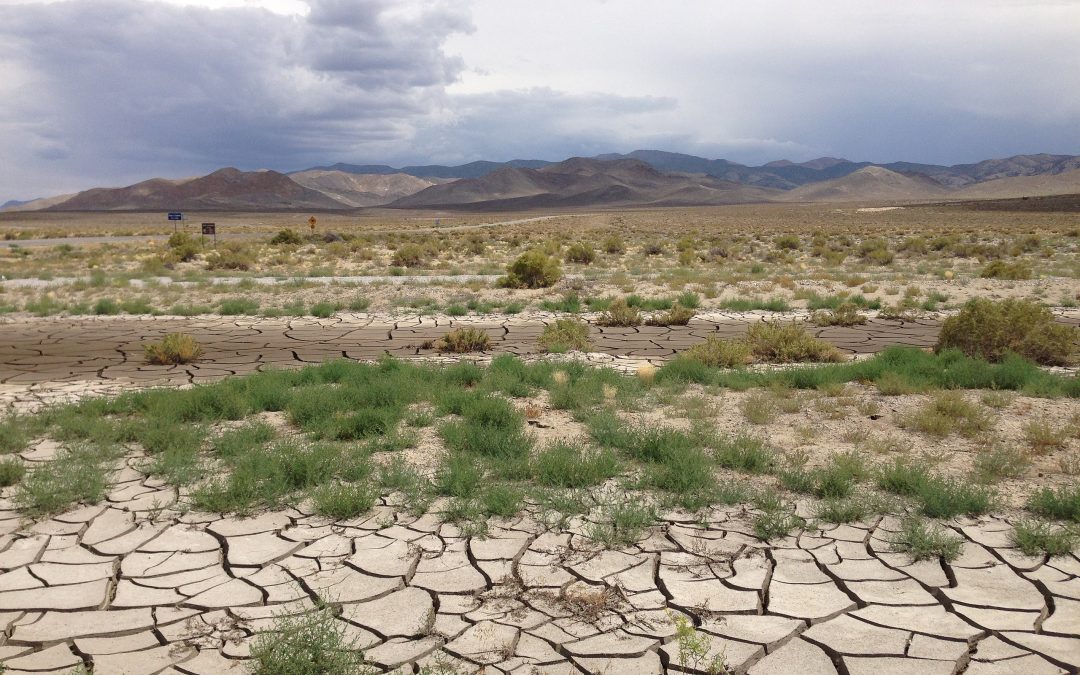
I have previously written about the growing mega-drought in the American Southwest, but climatologists are warning this super drought is getting worse and a crisis point may be reached later this year. The first link, from USA Today, is worth reading all the way through. It details the many serious ramifications on the USA that this mega-drought will soon cause. Much of America’s food supply comes from farms using irrigated water from the reservoirs that accompany the major Southwestern USA dams. This part of the US food supply is now at risk as many water-users will be fighting for their former share of the Colorado River Basin’s water. However, it is now clear everyone will have to cut back their water use. Previous inter-state water use agreements will likely have to be re-written as previous agreements were written to allocate large volumes of acre-feet of water which no longer exist. In a time when “affordability” is a big issue in American politics, the extreme water shortage in the Southwestern states is going to make fruits and vegetables more expensive and there is likely to be lesser volume of food available.
The big dams in the Southwestern states generate electricity for millions of Americans. The first link points out that Lake Powell, just one of the reservoirs in the region, supplies electricity for a half-million American households in the Southwest. The link warns that “the lake level could by this Fall drop below what’s known as ‘power pool,’ or the minimum level necessary to spin the turbines.” Previous posts on this topic have cited articles using the term “dead pool,” which I think means the same thing. It means that when the water levels drop below the level of the intake pipes at the lakes, there will cease to be enough water to spin the turbines that generate electricity for the region. This will precipitate a massive crisis if millions of Americans start turning on electric switches and nothing happens. I did see a story on cable TV that extraordinary measures are being considered to avoid power black-outs for Southwestern states so there has been some minimal TV media coverage of this crisis. The first link states one such measure is to drain a Wyoming lake and send its water down the Colorado River to Southwestern states. I’m sure any such robbery of water from Wyoming’s water users will generate legal battles and the federal government may have to step in and impose a solution. The article warns that this “power pool” level in Lake Powell may be reached by this Fall. That lake is already at its lowest level since records have been kept.
Cites are already taking action to prepare for a prolonged water shortage. The first link also notes that Denver is ordering major cuts in lawn-watering and restaurants will cease serving water with meals unless water is specifically requested. The article warns that “tens of thousands” of businesses are now at risk and that there will be an increased risk of wildfires. I suggest they add dust storms to that list of risks. One TV news story showed a dust storm in Texas which already was quite severe. Erie, Colorado is facing a severe water shortage and the city has warned that residents wasting water on their lawns may have water service to their homes canceled. Salt Lake City has banned the construction of any large-scale projects that use “significant” amounts of water.
Such restrictions will surely spread across seven or more states in the Western part of the USA. It is not hard to predict who some of the winners and losers will be in the water wars which will begin later this year if major rainfalls are not received soon. Food and electricity are necessities so water allocations for these uses will be safeguarded as much as possible, but even these sectors will have to “do more with less.” Commercial data centers, which use major amounts of water and electricity, will almost certainly have to be “mothballed” as water cannot be spared for them. Losers will also include golf courses, businesses keeping lawns green and private swimming pool builders and users. I expect private swimming pools will likely be banned from being filled with water at all in some areas. If the water shortage continues to worsen, I expect major water users will be assigned a specific monthly allocation of water and that water service to those addresses will be shut off as soon as they have used up their monthly water allocation. Such a restriction may even be applied to residential homes.
The second link reinforces the information contained in the first link. There are more problems developing. A 1.2 million square foot, multi-block warehouse in California just went up in flames (third link). It contained huge reserves of paper products (tissue paper, toilet paper, paper towels, disposable diapers, etc.). That had to be a significant percentage of the nation’s reserves of paper goods.
As a practical matter, I suggest that all readers living in drought-affected areas should stock up on bottled drinking water and other essential items. Also, given that a large inventory of paper goods has just been destroyed, it would be prudent to have reserves of the paper products you need. Some Christians think that it is “a lack of faith” to prepare for hard times, shortages and challenges. They argue “God will provide” and they refuse to prepare. That is a very wrong view of the scriptures. Years ago, I wrote an article on this very subject: Should Christians Prepare for Hard Times? I think you will find it helpful and biblically sound.
- https://www.usatoday.com/
story/news/nation/2026/03/30/ water-drought-west-snowpack- restrictions/89320612007/ - https://www.cnn.com/2026/04/
06/climate/colorado-drought- water-restrictions-denver- aurora - https://abc7.com/post/
employee-arrested-arson- kimberly-clark-distribition- center-destroyed-massive-fire- ontario/18851549/h
